Wings Over Ukraine: What the War Taught Us About Air Power
The largest air war in Europe since 1945 has upended decades of assumptions about stealth, drones, and air superiority. The lessons are still being absorbed.
Introduction
When Russia invaded Ukraine on February 24, 2022, most analysts expected the Russian Air Force to establish air superiority within days. Russia possessed over 1,500 combat aircraft compared to Ukraine's 124. It had modern fighters, cruise missiles, and electronic warfare systems. The first night was supposed to look like Desert Storm.
It did not.
The Air Superiority That Never Came
Russia failed to destroy the Ukrainian Air Force on the ground, a failure so fundamental that it reshaped the entire conflict. Ukrainian jets, dispersed to highway strips and secondary airfields, survived the initial missile strikes and continued flying. Within weeks, it became clear that neither side could achieve air superiority over the other.
The reason was air defense. Ukraine's layered network of Soviet-era S-300s, medium-range Buk missiles, and short-range systems created an integrated defense that made the airspace over most of the country lethal for any aircraft flying above a few hundred feet. Russia had the same problem in reverse: its own S-400 and Pantsir systems made Ukrainian airspace equally dangerous for Ukrainian aircraft approaching Russian positions.
The result was something Western air forces had not planned for: a war in which neither side controls the sky. Pilots on both sides fly at treetop level, popping up briefly to launch weapons before diving back below radar coverage. Losses have been severe.
The F-16 Question
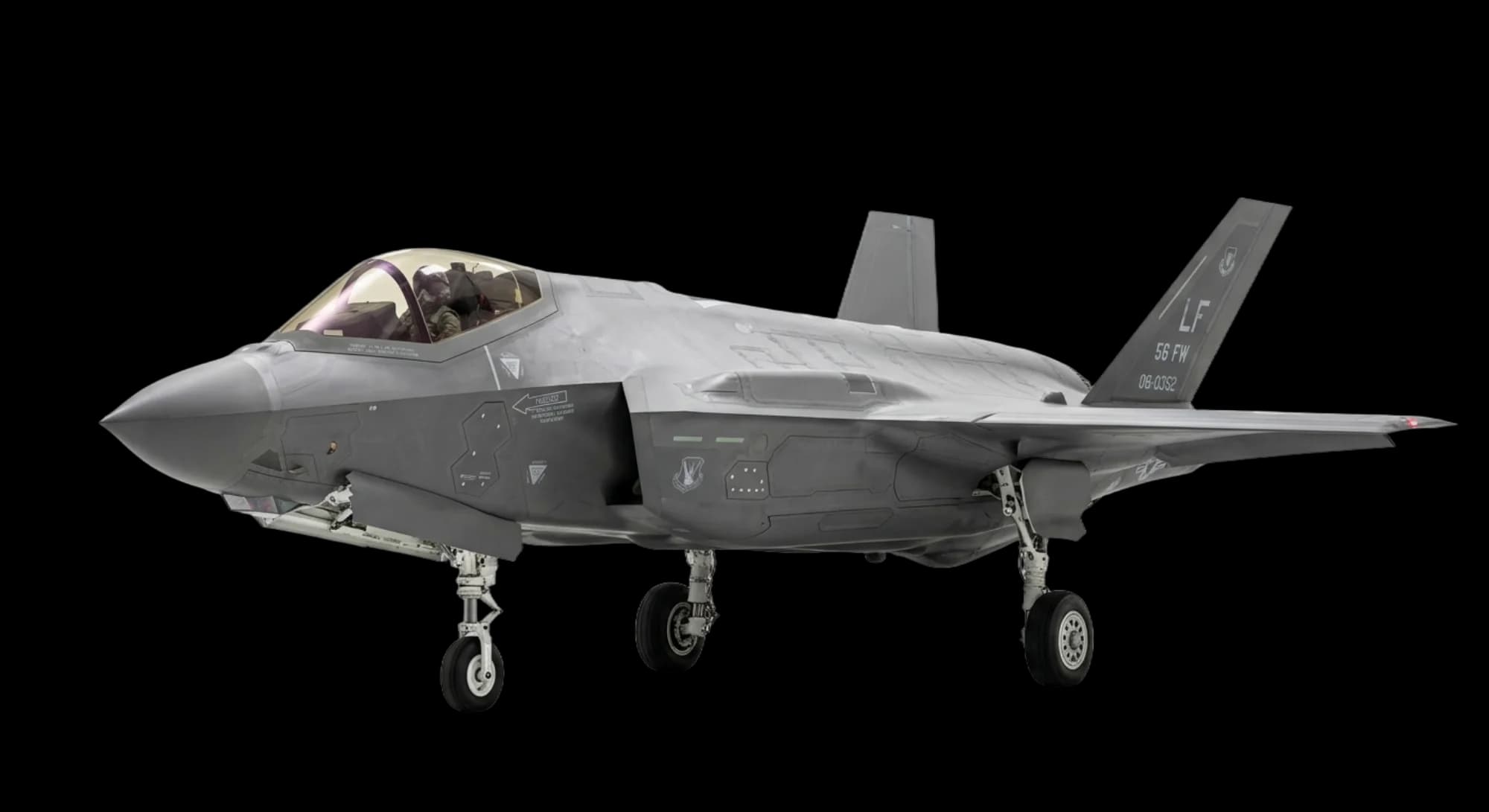
Western nations eventually agreed to supply F-16 Fighting Falcons to Ukraine, a decision that was politically momentous but militarily complex. The F-16 is a formidable aircraft, but it was designed for the Cold War's Central European theater, where bases had hardened shelters, established maintenance infrastructure, and air defense umbrella protection.
In Ukraine, the F-16 operates in an environment for which it was never intended. Airfields are under constant threat. Maintenance must be performed in improvised facilities. Spare parts supply chains stretch across continents. The pilots, trained in compressed timelines, face veteran Russian aircrews in aircraft specifically designed to counter Western fighters.
The F-16 has provided Ukraine with capabilities it previously lacked, particularly in the delivery of Western precision-guided weapons and the use of AIM-120 AMRAAM missiles. But it has not been the game-changer some predicted. Air defense, not air superiority fighters, remains the decisive factor in the conflict.
The Drone Revolution Accelerates
If manned aircraft have been constrained, drones have flourished. Ukraine has pioneered the mass use of small, cheap drones in ways that no military doctrine anticipated. Modified commercial quadcopters dropping grenades. First-person-view racing drones rigged with explosive charges, flown directly into tanks and trenches. Converted agricultural drones conducting reconnaissance.
The numbers are staggering. Ukraine is producing hundreds of thousands of FPV drones per month. At a cost of a few hundred dollars each, they are destroying armored vehicles, artillery pieces, and fortifications worth millions. The economics are disruptive in the deepest sense.
Larger drones have also proven their value. The Turkish Bayraktar TB2 achieved early fame for destroying Russian air defense systems and logistics convoys. Ukrainian-developed maritime drones have attacked Russian naval vessels in the Black Sea, effectively neutralizing Russia's naval advantage without Ukraine possessing a single warship.
Electronic Warfare's Comeback
The Ukraine conflict has demonstrated that electronic warfare, the ability to jam radars, disrupt communications, and spoof GPS signals, is as important as any weapon system. Russia's electronic warfare capabilities have proven formidable, degrading the accuracy of GPS-guided munitions and disrupting drone control links.
Ukraine has countered with rapid innovation, developing drones that use fiber-optic cables for guidance (immune to jamming), autonomous terminal seekers, and frequency-hopping communications. The cycle of measure and countermeasure accelerates monthly.
For Western air forces, the lesson is sobering. Many precision weapons depend on GPS. Communications depend on satellite links. Data networks depend on electromagnetic spectrum access. An adversary with strong electronic warfare capabilities can degrade all of these simultaneously.
What It Means for the Future
The war in Ukraine is forcing a fundamental reassessment of air power doctrine. The assumptions that underpinned Western planning, rapid air superiority, precision strikes against fixed targets, network-centric warfare in a permissive environment, have all been challenged.
The emerging lessons are clear: air defense is more important than air superiority fighters in the opening phase of a conflict. Cheap, attritable drones can achieve effects previously reserved for expensive manned aircraft. Electronic warfare is not a supporting capability but a decisive one. And mass, the ability to absorb losses and continue fighting, matters more than the individual quality of any single platform.
The pilots who flew Spitfires over Britain, MiGs over Korea, and Phantoms over Vietnam would recognize the essential truth: air power is not about individual aircraft. It is about the system. The war in Ukraine is teaching that lesson again, in real time, at enormous cost.
Written by Singular Heritage Team
Published March 22, 2026 · 7 min read
Part of the Singular Heritage network