B-21 Raider: Inside America's New Stealth Bomber
The most secretive aircraft program since the F-117 has produced a bomber designed to penetrate any air defense on Earth. The B-21 Raider is the future of American strategic air power.
Introduction
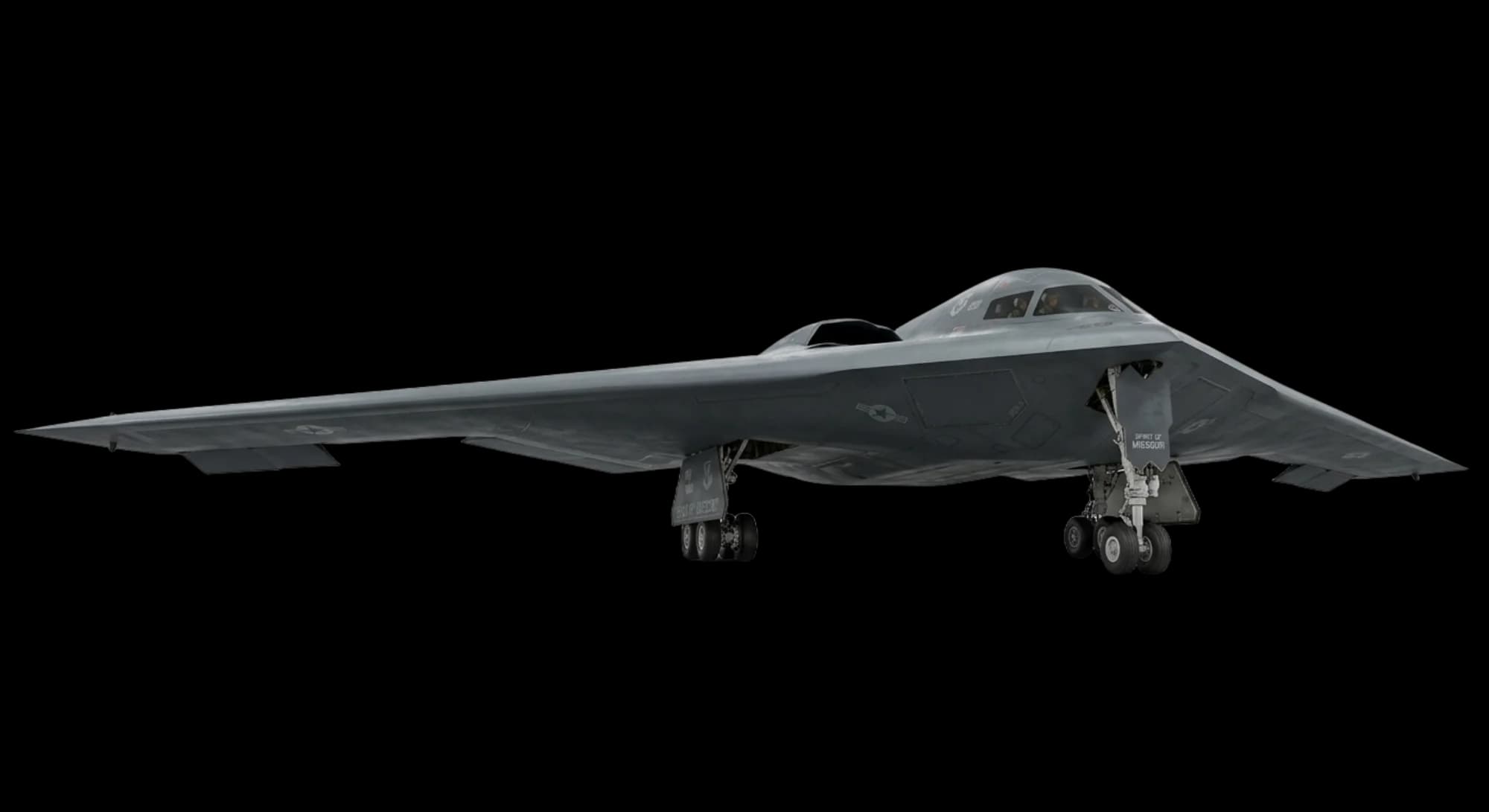
On November 10, 2023, a flying wing lifted off from Air Force Plant 42 in Palmdale, California, and banked over the Mojave Desert. It looked like a ghost. No engine pods broke the smooth upper surface. No vertical stabilizer disturbed the knife-edge trailing line. The Northrop Grumman B-21 Raider was airborne for the first time, and with it, a new chapter in stealth aviation had begun.
Why a New Bomber?
The United States operates three strategic bombers. The B-52 Stratofortress, now over 70 years old, is a subsonic workhorse that excels at standoff missile delivery but cannot penetrate modern air defenses. The B-1B Lancer, designed to fly low and fast under radar, lost its nuclear mission and has been pushed hard in conventional roles, wearing out its airframe. The B-2 Spirit, the only stealth bomber, is extraordinarily capable but so expensive that only 21 were built, and the loss of even one would be strategically significant.
The B-21 was designed to solve all three problems: stealth penetration capability in the B-2 tradition, but at a cost that allows production in meaningful numbers. The Air Force plans to acquire at least 100 B-21s, and potentially more, making stealth bombing a routine capability rather than a strategic luxury.
What We Know (and Don't Know)
The B-21 program is classified to a degree unusual even for military aircraft. Most of its specifications remain secret. What is publicly known paints a picture of a medium-size flying wing, slightly smaller than the B-2, powered by two Pratt & Whitney F135-derived engines. The aircraft is designed from the ground up for low observability across all radar bands, including the low-frequency radars that can detect the B-2 at certain angles.
Unlike the B-2, which was designed during the Cold War primarily for nuclear strike missions, the B-21 was conceived for a broader role. It can deliver both nuclear and conventional weapons, operate as a sensor and communication node in a networked battlespace, and potentially control autonomous wingman drones. Some analysts believe an unmanned variant is already being developed.
The aircraft's open-systems architecture means its avionics can be updated continuously without the expensive rewiring that plagued earlier stealth platforms. This is a direct lesson from the F-35 program, where software updates have been as important as the hardware itself.
The China Factor
The B-21's development timeline is inseparable from the rise of China as a near-peer military competitor. The People's Liberation Army has invested heavily in integrated air defense systems, anti-access/area denial (A2/AD) capabilities, and its own stealth aircraft, including the Chengdu J-20 fighter. The vast distances of the Pacific theater demand an aircraft that can fly thousands of miles, penetrate sophisticated defenses, strike with precision, and return.
The B-2's 30-hour round-trip missions from Missouri to Kosovo in 1999 demonstrated the concept. The B-21 is designed to make such missions routine, operating from dispersed bases across the Indo-Pacific and potentially forward-deploying to locations like Diego Garcia, Guam, and Australia.
A Lineage of Stealth
The B-21 stands at the end of a lineage that began with Lockheed's Have Blue technology demonstrator in 1977. The F-117 Nighthawk proved stealth worked in combat. The B-2 Spirit proved a flying wing could be both stealthy and capable of intercontinental range. The F-22 and F-35 brought stealth to fighters. Each generation refined the technology, reducing manufacturing cost and increasing reliability.
The B-21 represents the maturation of stealth. Where the B-2 required extraordinarily labor-intensive maintenance to preserve its radar-absorbing coatings, the B-21 uses advanced materials that are more durable and easier to maintain. Where the B-2 could only operate from Whiteman AFB with its specialized hangars, the B-21 is designed for dispersed operations from austere bases.
The Bomber's Enduring Relevance
Critics have questioned whether manned bombers still matter in an age of cruise missiles, hypersonic weapons, and autonomous drones. The answer, according to air power strategists, is that bombers provide something missiles cannot: persistence, flexibility, and the ability to be recalled.
A cruise missile, once launched, cannot be redirected. A bomber orbiting at the edge of defended airspace can wait for hours, respond to changing intelligence, select from multiple weapons and targets, and if the situation changes, return home without firing a shot. This flexibility has proven invaluable in every conflict since Desert Storm.
The B-21 Raider is named after the Doolittle Raiders, who flew B-25 bombers off the USS Hornet to strike Tokyo in April 1942. That mission was an act of audacity that changed the psychological dynamic of the Pacific War. The B-21 carries forward that spirit: the ability to reach anywhere, anytime, regardless of what stands in the way.
Written by Singular Heritage Team
Published March 15, 2026 · 6 min read
Part of the Singular Heritage network