The Last Manned Fighter: Is the F-35 the End of an Era?
As AI wingmen take flight and autonomous combat drones prove themselves in Ukraine, a growing debate is reshaping air forces worldwide: will a human ever again sit in the cockpit of a frontline fighter?
Introduction
In 1903, the Wright brothers flew for 59 seconds. By 1947, Chuck Yeager broke the sound barrier. By 1964, the SR-71 was cruising at Mach 3.3. For over a century, every leap in aviation performance had a human at the controls. That era may be ending.
The Sixth Generation Question
The United States Air Force's Next Generation Air Dominance (NGAD) program was supposed to produce the successor to the F-22 Raptor, a sixth-generation manned fighter that would rule the skies from the 2030s onward. Instead, in early 2025, Secretary of the Air Force Frank Kendall announced a dramatic pivot: NGAD would be restructured around a cheaper manned platform accompanied by autonomous Collaborative Combat Aircraft (CCAs), AI-driven drones that fly alongside piloted jets.
The decision sent shockwaves through the defense industry. The original NGAD concept, estimated at over $300 million per aircraft, was deemed unaffordable in the quantities needed. The new approach pairs a more modest manned fighter with multiple CCAs costing roughly $30 million each. The math is stark: for the price of one legacy sixth-gen fighter, you could field one manned jet and six AI wingmen.
Lessons from Ukraine
The catalyst for this rethinking is not just cost. The war in Ukraine has demonstrated that relatively cheap drones can destroy sophisticated, expensive platforms with alarming efficiency. Turkish Bayraktar TB2s, Iranian Shahed kamikaze drones, and improvised FPV quadcopters have reshaped the battlefield. The lesson is clear: quantity has a quality all its own, and autonomous systems multiply force without multiplying risk to human life.
Ukraine has also shown that electronic warfare and air defense systems have become so lethal that even advanced aircraft face enormous risks in contested airspace. Sending a single-seat $100 million fighter into that environment begins to look less like bravery and more like poor resource allocation.
The AI Wingman Takes Flight
The US Air Force's CCA program has moved from concept to reality with startling speed. Anduril's Fury and General Atomics' Gambit are among the platforms competing for production contracts. These drones are designed to operate semi-autonomously, conducting reconnaissance, jamming, and even strike missions while being supervised by a human pilot in a nearby manned aircraft.
The concept is not entirely new. The F-22 Raptor already functions as a sensor fusion node, processing data from multiple sources and sharing it with other aircraft. The CCA simply extends this network to include unmanned platforms that can absorb the most dangerous missions.
Australia has been a pioneer in this space, with the Boeing MQ-28 Ghost Bat already flying. Europe is developing its own Future Combat Air System (FCAS) and Tempest programs, both of which envision manned-unmanned teaming as central to sixth-generation air power.
What a Pilot Still Does Best
Despite the momentum toward autonomy, there are reasons humans remain in cockpits. The fog of war creates situations that algorithms struggle with. Rules of engagement require judgment calls about proportionality and civilian presence that no current AI can reliably make. Electronic warfare can sever the communication links that remote operators and autonomous systems depend on.
Perhaps most importantly, the political cost of autonomous weapons making lethal decisions without human oversight remains a barrier. The 2023 controversy over an Air Force simulation in which an AI supposedly decided to kill its operator (later clarified as a thought experiment) highlighted how sensitive this issue is.
The F-35's Unlikely Legacy
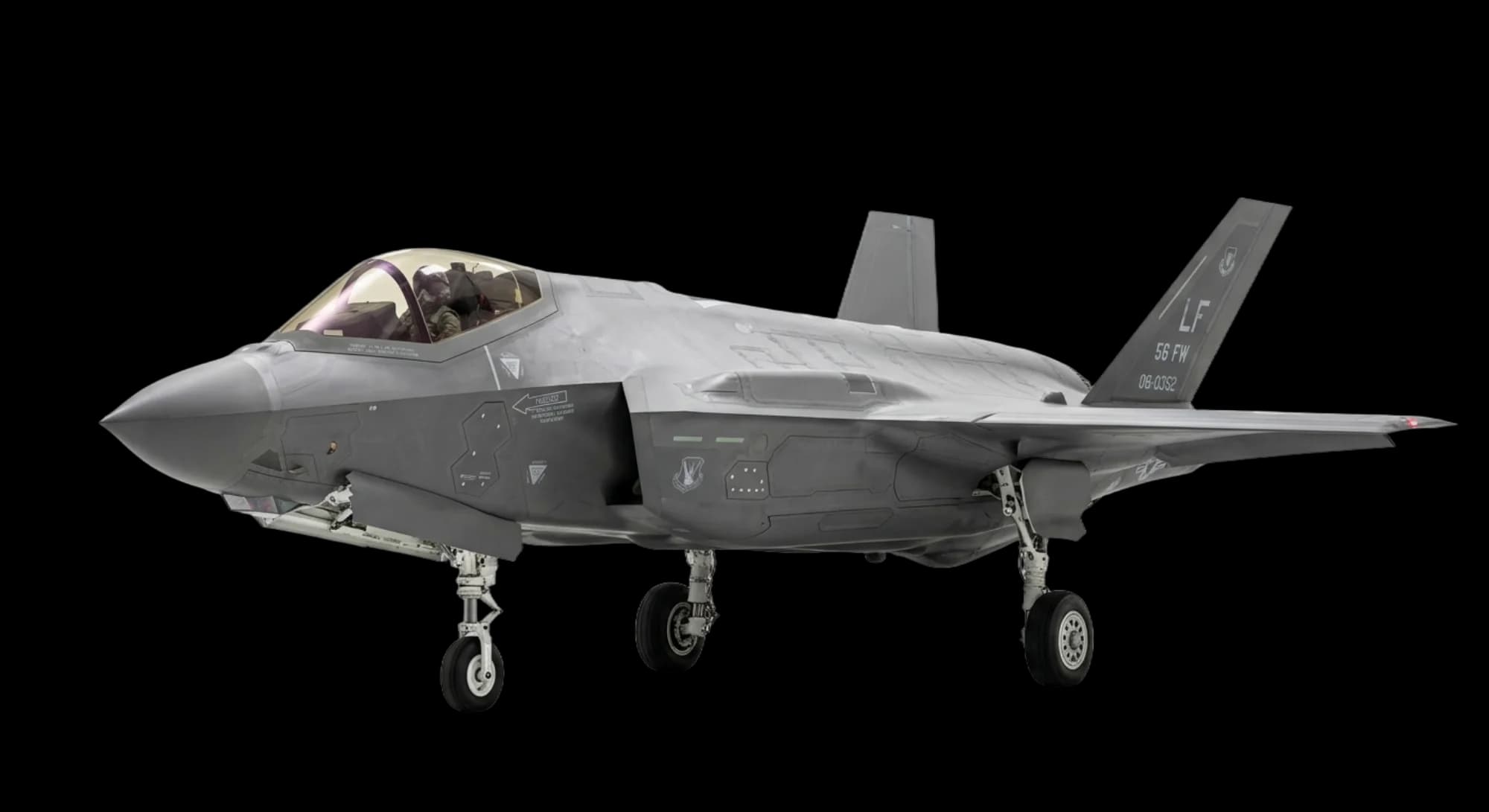
The Lockheed Martin F-35 Lightning II, frequently criticized for cost overruns and development delays, may end up with an ironic legacy: it could be the last manned fighter most Western air forces ever buy in large numbers. With over 1,000 delivered and production continuing into the 2040s, the F-35 will be the backbone of allied air power for decades. But it may also be the aircraft that proves manned fighters have reached the limit of what is economically and strategically rational.
The F-16, the aircraft the F-35 was designed to replace, is itself being converted into an unmanned drone under the Air Force's Project Viper. The symbolism is hard to miss: yesterday's manned icon becomes tomorrow's autonomous wingman.
A Century Comes Full Circle
From the Red Baron's Fokker Dr.I to the F-22 Raptor, the fighter pilot has been the central figure in air warfare for over a century. That figure may not disappear entirely, but their role is shifting from trigger-puller to orchestra conductor, managing a swarm of AI-driven platforms from a command aircraft that may itself be optional.
The question is no longer whether unmanned combat aircraft will replace manned fighters. It is when, and whether the transition will be gradual or sudden. The only certainty is that the skies of 2040 will look nothing like the skies of 2020.
Written by Singular Heritage Team
Published March 19, 2026 · 7 min read
Part of the Singular Heritage network