The Concorde Paradox: Why We Went Backwards in Speed
In 2003, the fastest commercial aircraft ever built made its last flight. Two decades later, airline passengers still fly slower than their parents did. What happened to the future of speed?
Introduction
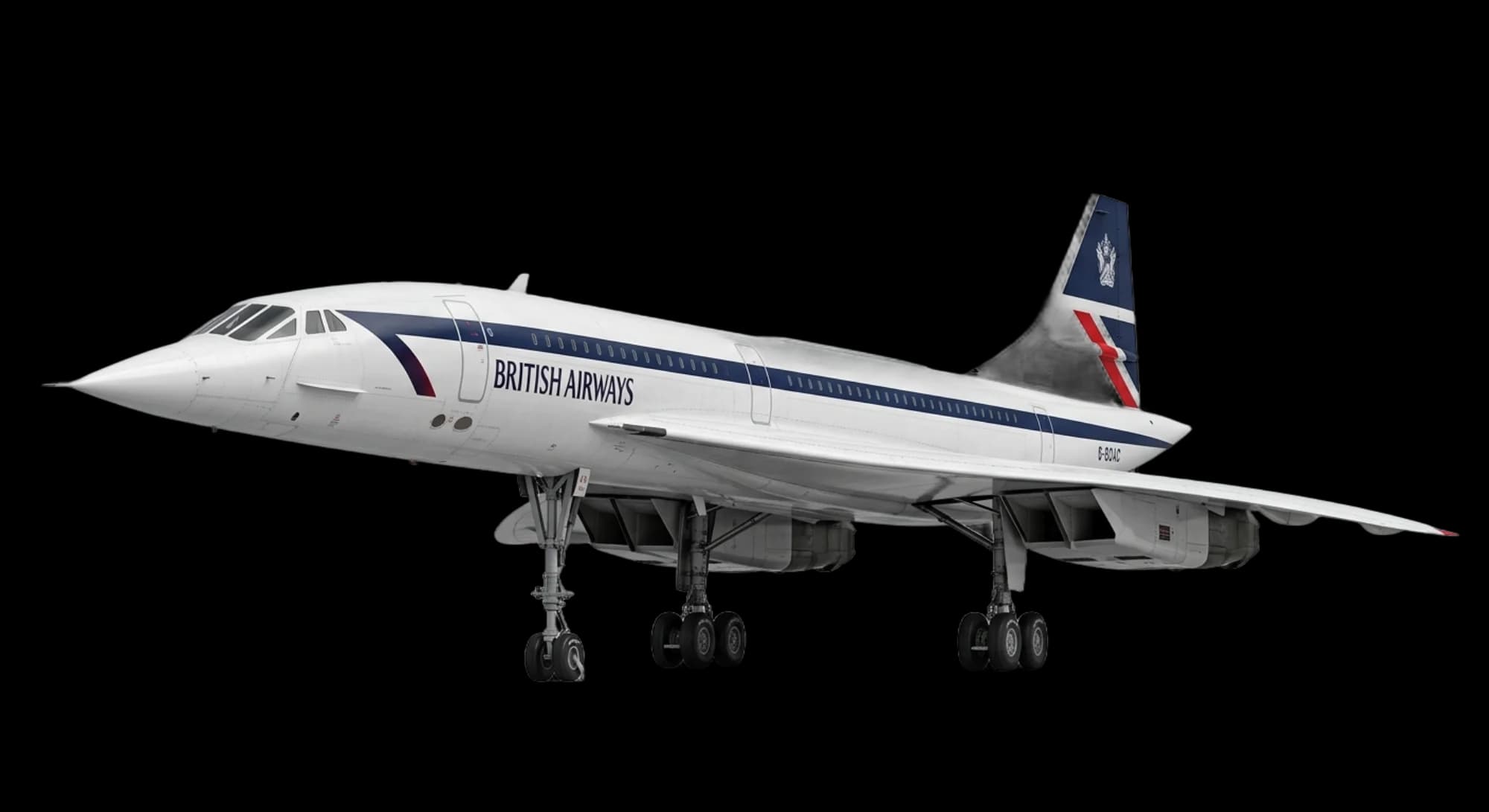
On October 24, 2003, a British Airways Concorde touched down at Heathrow Airport for the last time. The crowd that gathered to watch was enormous. People wept. Cameras flashed. The age of supersonic commercial flight, which had lasted 27 years, was over. Nothing has replaced it.
The Economics of Going Slow
The paradox of modern aviation is that aircraft have gotten better at everything except speed. A Boeing 787 Dreamliner is quieter, more fuel-efficient, more comfortable, and cheaper to operate than any airliner in history. It is also slower than the Boeing 707 that inaugurated the jet age in 1958. Both cruise at roughly Mach 0.85. In more than six decades, the cruising speed of commercial aircraft has not increased at all.
The reason is economics. Concorde could cross the Atlantic in 3 hours and 30 minutes, but it burned four times as much fuel per passenger as a subsonic 747 making the same journey in 7 hours. The ticket price reflected this: a round-trip Concorde fare was roughly equivalent to a first-class subsonic ticket, but the aircraft carried only 100 passengers compared to the 747's 400. The math never worked.
Airlines discovered that passengers, given the choice, overwhelmingly preferred cheaper tickets over faster ones. The widebody revolution of the 1970s and 1980s, led by the 747, proved that the real money in aviation was in carrying more people for less, not carrying fewer people faster.
The Sonic Boom Problem
Speed was not just an economic problem. It was a political one. Concorde's sonic boom, a thunderclap that rattled windows and terrified livestock, made it unwelcome over land. The United States banned overland supersonic flight in 1973, a decision that effectively limited Concorde to transatlantic routes. This destroyed the business case for a network of supersonic services.
The boom is a consequence of physics, not engineering failure. Any object traveling faster than sound creates a pressure wave that reaches the ground as a sharp noise. Concorde's designers knew this, but they believed the problem would be solved by future technology or that regulations would be relaxed. Neither happened.
The Tupolev Tu-144: The Other Concorde
The Soviet Union built its own supersonic transport, the Tupolev Tu-144, which actually flew before Concorde. The Tu-144 was rushed into service in 1975 on the Moscow to Alma-Ata route but was plagued by reliability problems. After a fatal crash and persistent mechanical issues, Aeroflot withdrew it from passenger service after just 55 flights. The Tu-144 became a cautionary tale about the dangers of prioritizing national prestige over engineering maturity.
Can Boom Break the Curse?
Two decades after Concorde's retirement, a Denver-based startup called Boom Supersonic is attempting to revive supersonic travel with its Overture airliner. The Overture is designed to carry 65 to 80 passengers at Mach 1.7, roughly 80% of Concorde's speed, while burning sustainable aviation fuel and meeting current noise regulations.
Boom's approach differs from Concorde's in crucial ways. Where Concorde was a government-funded prestige project, Overture is commercially financed and designed from the start around airline economics. Where Concorde used afterburning turbojets that guzzled fuel, Overture will use modern turbofan engines optimized for supersonic efficiency.
NASA is attacking the boom problem directly with its X-59 Quesst aircraft, designed to produce a quiet sonic thump instead of a thunderous boom. If the X-59 demonstrates that quiet supersonic flight over land is achievable, it could lead to a reversal of the overland ban and open domestic supersonic routes.
The Speed of Progress
The Concorde paradox reveals something profound about how technology evolves. Progress is not always linear. Sometimes a capability is achieved, demonstrated, and then abandoned because it does not align with economic reality or social acceptance. The world had supersonic passenger flight for 27 years and chose to give it up.
Whether Boom or another company will crack the code remains uncertain. But the appetite for speed has not disappeared. The Wright brothers flew at 30 mph. Concorde flew at 1,354 mph. The next chapter in that story is still being written.
Written by Singular Heritage Team
Published February 24, 2026 · 6 min read
Part of the Singular Heritage network